How to Get an ITIN Without an SSN: The Complete 2026 Guide
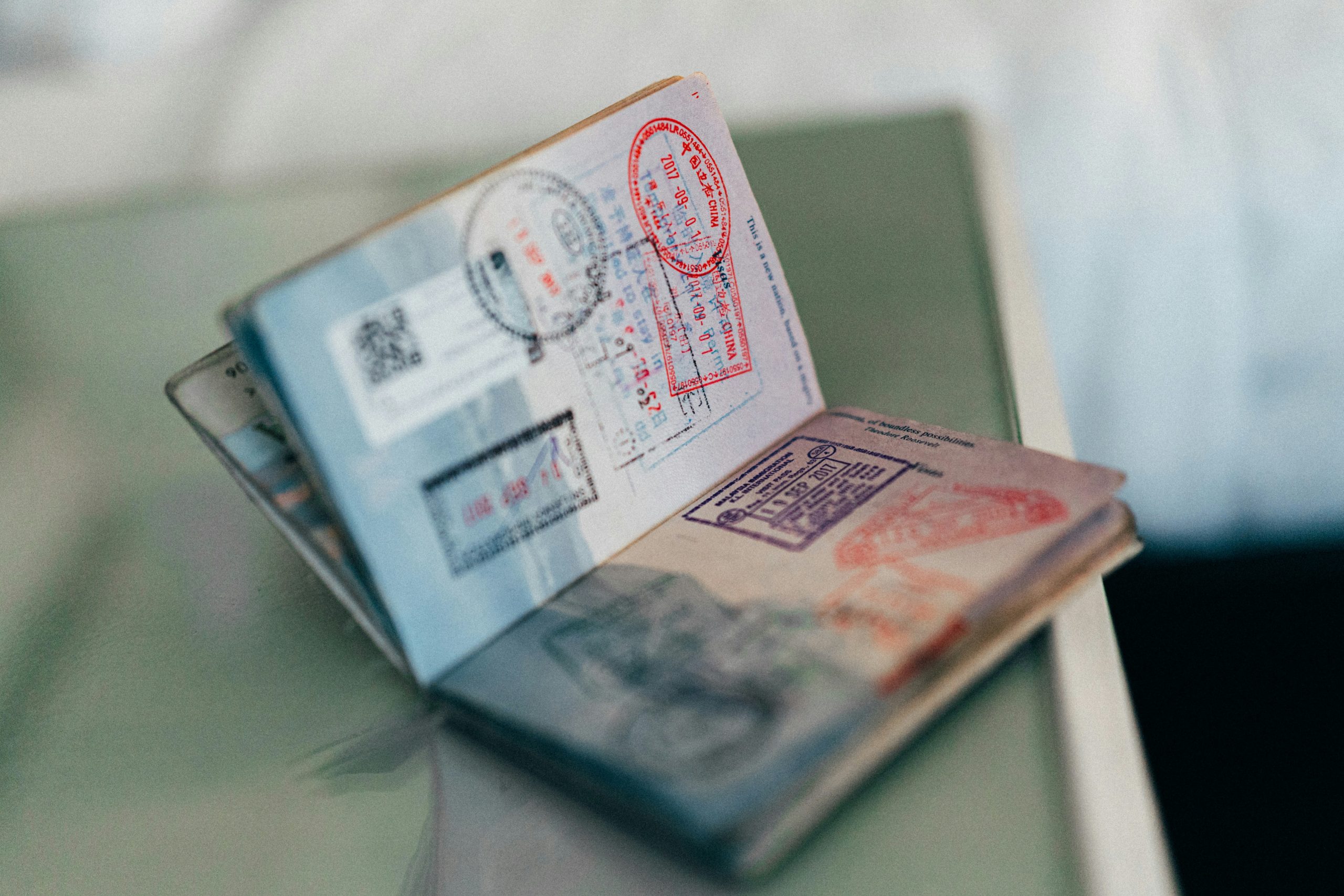
Photo via Unsplash
To get an ITIN, you file Form W-7 with the IRS, attach a federal tax return (unless you qualify for an exception), and submit proof of identity and foreign status. A valid foreign passport is the only document that satisfies both requirements on its own — everything else requires two documents. Expect roughly 7 weeks for a decision, or 9–11 weeks if you apply between January and April.
- What an ITIN is — and what it isn’t
- Who actually needs one
- The 13 documents the IRS accepts
- The notarized-copy mistake that gets applications rejected
- Four ways to apply, compared
- Step-by-step: filing Form W-7
- What happens after you apply (CP565, CP566, CP567)
- Why applications get rejected
- How ITINs expire
- Frequently asked questions
1. What an ITIN is — and what it isn’t
An Individual Taxpayer Identification Number (ITIN) is a nine-digit number the IRS issues to people who have a U.S. tax filing obligation but aren’t eligible for a Social Security Number. Every ITIN begins with the digit 9, which is how the IRS distinguishes it from an SSN.
The distinction that matters most: an ITIN exists only for federal tax purposes. It is not an immigration document, it doesn’t grant work authorization, and it doesn’t affect your immigration status in either direction. It is a filing number, nothing more.
That said, it does open practical doors. Many major banks accept an ITIN as identification for opening an account, and it’s the number you’ll use to claim tax refunds or credits you’re legally entitled to.
Don’t apply if you qualify for an SSN. If you’re eligible for a Social Security Number, apply for that instead. Holding both creates account complications later, and the IRS will not issue an ITIN to someone who qualifies for an SSN.
2. Who actually needs one
You generally need an ITIN if you’re not eligible for an SSN and you fall into one of these categories:
- A nonresident who must file a U.S. federal tax return
- A resident for tax purposes — based on how many days you were physically present in the U.S. — who needs to file
- The spouse or dependent of a U.S. citizen or resident, when claimed for a tax benefit that allows it
- A nonresident student, professor, or researcher with a filing or reporting obligation
- A nonresident claiming a benefit under a tax treaty between the U.S. and your country
Important limit for spouses and dependents. A spouse or dependent can’t get an ITIN just to be listed on a return. They need to either be claimed for a specific allowable tax benefit or be filing their own return. This rule catches a lot of families off guard.
3. The 13 documents the IRS accepts
This is where most applications succeed or fail. The IRS accepts exactly 13 documents to establish who you are and your connection to a country outside the U.S. Every document you submit must be current and unexpired on the day you submit your application, and must be an original or a certified copy.
The passport shortcut
A valid foreign passport is the only stand-alone document — it proves both identity and foreign status by itself. Submit one, and you need nothing else. Submit anything else, and you need two documents: one proving identity and one proving foreign status, with at least one showing your photograph.
| Document | What it proves |
|---|---|
| Foreign passport (valid) | Identity and foreign status — stand-alone |
| USCIS photo identification | Identity and foreign status |
| U.S. visa issued by the Department of State | Identity and foreign status |
| Foreign military identification card | Identity and foreign status |
| National identification card | Identity and foreign status |
| Foreign voter’s registration card | Identity and foreign status |
| Civil birth certificate | Identity; foreign status only if foreign-issued |
| Medical records (dependents under 6) | Identity; foreign status only if foreign-issued |
| School records (dependent students under 24) | Identity; foreign status only if foreign-issued |
| U.S. driver’s license | Identity only |
| Foreign driver’s license | Identity only |
| U.S. state identification card | Identity only |
| U.S. military identification card | Identity only |
A national identification card only counts if it displays your name, photo, address, date of birth, and an expiration date that hasn’t passed. A civil birth certificate is the exception to the expiration rule — it never expires, so it’s always considered current.
Applicants under 18
A dependent under 18 without a valid passport must submit an original civil birth certificate. There’s no substitute for it.
4. The notarized-copy mistake that gets applications rejected
The IRS does not accept notarized copies. This is probably the single most expensive misunderstanding in the ITIN process — people pay a notary, mail the package, and wait two months only to be rejected.
A “certified copy” in the IRS sense means a copy issued and stamped by the agency that originally issued the document. For a passport, that’s the passport authority of your home country — or a U.S. embassy or consulate abroad, which can provide certification and authentication services. A notary public confirming your signature is not the same thing and will not be accepted.
There is one narrow exception: dependents and spouses of U.S. military personnel applying from an overseas or APO/FPO address may submit notarized copies, provided they include a copy of the servicemember’s U.S. military ID.
If you’re certifying a passport copy and your application requires a visa, the certified copy must include all U.S. visa pages.
5. Four ways to apply, compared
How you submit matters more than most people realize — mainly because of one question: do you have to mail your original passport to Texas and wait?
| Method | Cost | Keeps your originals? |
|---|---|---|
| IRS Taxpayer Assistance Center (with ITIN services) | Free | Yes — most documents authenticated and returned at your appointment |
| VITA site with ITIN services | Free | Yes — and they help you complete the form |
| Certifying Acceptance Agent (CAA) | Fee-based | Yes — available in the U.S. and internationally |
| Mail to the IRS | Free | No — originals can take up to 60 days to come back |
If you need your passport during the next two months, don’t mail it. Book a Taxpayer Assistance Center appointment or use a Certifying Acceptance Agent instead. Note that a regular “Acceptance Agent” — without the “Certifying” — cannot authenticate your documents, so you’d still be mailing originals. Check the title carefully before paying anyone.
TAC appointments can take several weeks to get, so book early if you’re filing near a deadline.
One limitation worth knowing: Taxpayer Assistance Centers can authenticate almost everything in person, but not school and medical records for dependents. Those have to be mailed with the application package regardless.
6. Step-by-step: filing Form W-7
Step 1 — Complete Form W-7
Download the current version from IRS.gov. Each person applying needs their own separate W-7, including every family member.
Two fields cause the most trouble:
- The reason code. You check a box explaining why you need an ITIN. If you’re filing a tax return, that’s usually box (h), where you write in the form number — typically 1040. Picking the wrong code is a routine cause of delay.
- Your name. Enter it exactly as it appears on your passport or identity document — same spelling, same order, same accents. Mismatches between the W-7 and your supporting documents are one of the top rejection reasons.
Step 2 — Attach your federal tax return
In most cases, Form W-7 must be filed together with a completed Form 1040 or 1040-NR. Leave the SSN field blank for each ITIN applicant — the IRS fills in the assigned number and forwards the return for processing. If your spouse or dependents are also applying, attach their W-7 forms to the front of the return.
Certain exceptions let you file without a return, but they’re specific and listed in the W-7 instructions. Don’t assume you qualify.
Step 3 — Assemble your documents
Passport alone, or two qualifying documents. Verify nothing is expired as of your submission date. Check that copies are clean and legible — the IRS explicitly rejects packages with blemished or unclear documents.
Step 4 — Submit
Mail the package to the IRS ITIN processing center in Austin, Texas, or use one of the in-person options above.
Step 5 — Sign it
An unsigned form is an automatic rejection. If mailing, sign in ink. If someone signs on your behalf, they must complete the delegate section.
7. What happens after you apply
The IRS responds by physical mail with one of three notices. Knowing what each means before it arrives saves real time.
| Notice | Meaning | What to do |
|---|---|---|
| CP565 | Approved — your ITIN is assigned | Store it permanently. This letter is your proof of ownership. |
| CP566 | Something is missing or doesn’t match | Respond within 45 days of the notice date |
| CP567 | Rejected | Fix the issue and resubmit a complete package |
The 45-day window on a CP566 is a hard deadline. Miss it and the application goes cold — you start over from zero. If your documents are still being certified abroad and you need more time, call the IRS before the deadline passes and request an extension.
Realistic timelines
| When you apply | Expected wait for a decision |
|---|---|
| Standard period | About 7 weeks |
| Peak season (mid-January to April 30) | 9 to 11 weeks |
| From outside the U.S. | 9 to 11 weeks, plus mailing time |
| Return of mailed original documents | Up to 60 days |
There is no online tracker for ITIN applications. Once the minimum window has passed, the dedicated IRS ITIN line is 1-800-908-9982. Have your name, mailing address, date of birth, and the date you submitted the W-7 ready.
If you move after applying, call the IRS immediately. Your CP565 is mailed to the address on your W-7 and nowhere else. A change of address that doesn’t reach the IRS in time is a common way people lose their approval letter.
8. Why applications get rejected
- Name mismatch between the W-7 and supporting documents — including spelling and name order
- Notarized copies submitted instead of agency-certified ones
- An expired passport or ID — it must be valid on the submission date, not the date you filled out the form
- Missing signature
- No tax return attached when one was required and no valid exception was claimed
- Wrong reason code checked on the form
- Only one document submitted when no passport was included
- Missing proof of U.S. residency for a dependent who needed it
9. How ITINs expire
An ITIN is not permanent. It expires if it isn’t used on at least one federal tax return during any three consecutive tax years. Separately, ITINs with certain middle digits were retired on a rolling schedule between 2016 and 2020.
Renewal uses the same Form W-7, with the renewal box checked, and reinstates the same number — you don’t get a new one. Renewals are processed on the same 7-week and 9-to-11-week timelines, and must include a federal tax return unless an exception applies.
One useful exception: if your ITIN is only being used on information returns for reporting purposes, you don’t need to renew it right now. You would need to renew before using it on a tax return in the future.
Lost your ITIN?
Check your original CP565 notice first. If you can’t find it, options include your IRS online account (though the identity-verification step is often difficult for ITIN holders), the IRS helpline at 1-800-829-1040 from inside the U.S., or a prior tax preparer who holds a valid Power of Attorney on file for you.
10. Frequently asked questions
Does applying for an ITIN affect my immigration status?
No. An ITIN is a tax processing number issued for federal tax purposes only. It is not proof of immigration status and does not grant work authorization.
Can I apply for an ITIN from outside the United States?
Yes. You can mail your application from abroad, or use a Certifying Acceptance Agent, which are available internationally. U.S. embassies and consulates can also certify documents — contact the American Citizens Services section in advance for hours.
Do I have to mail my actual passport?
Only if you apply by mail without a certified copy. Applying in person at a Taxpayer Assistance Center or through a Certifying Acceptance Agent lets you keep your original documents.
Can I open a bank account with an ITIN?
Many major banks accept an ITIN as identification. Policies vary by institution and sometimes by branch, so confirm directly with the bank before you go.
What if I later become eligible for an SSN?
Stop using the ITIN and use your SSN going forward. Notify the IRS so your tax records can be merged under the new number.
Is there a fee to apply?
The IRS charges nothing. Taxpayer Assistance Centers and VITA sites are free. Certifying Acceptance Agents and Acceptance Agents are private services that charge their own fees.
ClearPath Finance provides general educational information about the U.S. tax and financial system. This article is not tax, legal, or immigration advice, and it does not create a professional relationship. Individual circumstances vary — consult the IRS directly or a qualified tax professional for guidance specific to your situation.